⚡ Marine Wiring & Power (The Foundation)
⚡ Marine Wiring & Power: The Root Cause of Most Failures
When marine electronics fail, most people blame the device.
🧊 The screen froze
📡 The GPS rebooted
🔊 The audio cut out
🎣 The trolling motor lost position
But in real-world marine diagnostics, the failure is rarely the equipment itself.
🎯 The true cause is almost always wiring and power delivery.
Marine wiring is the foundation every system depends on. When it’s done incorrectly — or allowed to degrade — it creates problems that appear random, expensive, and difficult to trace.
This article explains:
- ❌ Why marine wiring fails
- 🚨 How to recognize the warning signs
- 🔁 How to decide whether a system needs a repair or a complete re-wire
🌊 1. Why Marine Wiring Fails
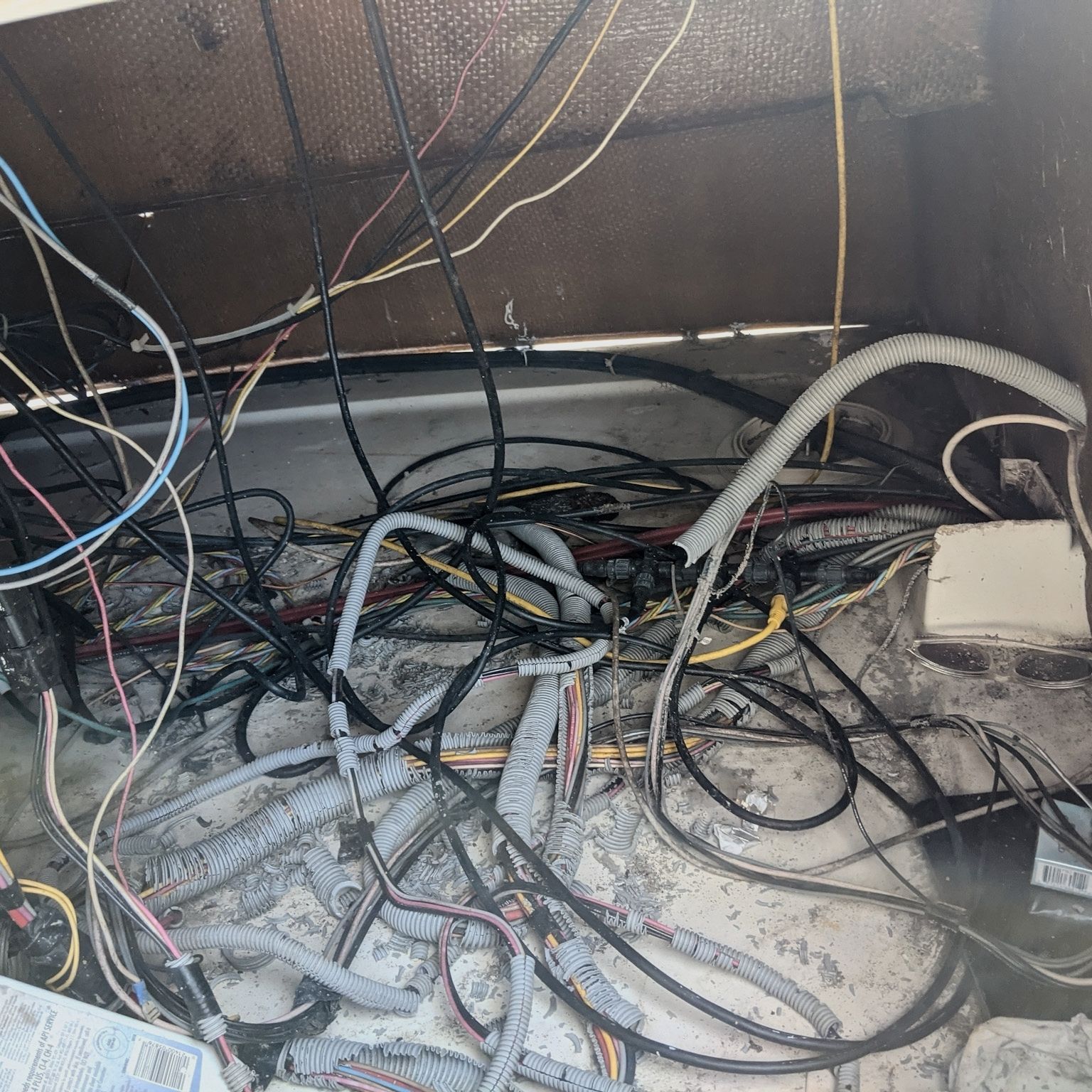
Marine environments are unforgiving.
🔥 Heat
🌀 Vibration
💧 Moisture
🧂 Salt
⚡ Load changes
All constantly stress electrical systems. Wiring that might survive in a vehicle or building often fails on a boat.
The most common reasons marine wiring fails:
- 📉 Undersized wire gauge
- ❌ Poor or improper terminations
- 🔌 Non-marine wire and connectors
- 🔄 Shared circuits with high-draw equipment
- 📏 Long wire runs without voltage drop consideration
- 🧯 Lack of strain relief and support
- 🌎 Poor grounding practices
-
🎯 These failures usually happen slowly — not all at once.
🚨 2. Symptoms Boat Owners Commonly Ignore
Wiring problems rarely announce themselves clearly.
Instead, they show up as small inconveniences that are easy to dismiss.
Common symptoms include:
- 🔄 Electronics rebooting when engines start
- 🧊 GPS or displays freezing intermittently
- 🔊 Audio cutting out at higher volume
- ⚡ Trolling motors losing power under load
- 🌗 Electronics dimming or lagging
- ❓ Systems behaving differently each trip
Because these issues come and go, many owners assume the equipment is “just glitchy.”
⚠️ In reality, these are early warning signs.
🔧 3. Fix vs Re-Wire: Making the Right Decision
Not every wiring issue requires a full re-wire — but many partial fixes fail because the root problem isn’t addressed.
🔩 When a Fix Makes Sense
A targeted repair may be appropriate when:
- ✅ The wiring is mostly marine-grade
- 🎯 The issue is isolated to one circuit
- 🧂 Corrosion is localized
- 📉 Voltage drop is minimal
- 🧭 The system layout is sound
In these cases, correcting terminations, replacing sections, or improving grounding can restore reliability.
🧱 When a Re-Wire Is the Smarter Choice
A full or partial re-wire is often necessary when:
- ❌ Multiple systems show symptoms
- 📉 Wiring is undersized throughout
- 🏠 Household or automotive wire was used
- 🔗 Circuits are stacked or daisy-chained
- 🧂 Corrosion is widespread
- 📄 No documentation exists
🎯 Re-wiring isn’t about making things “look clean” — it’s about restoring electrical integrity.
📐 4. Proper Marine Wiring Standards (What Actually Matters)
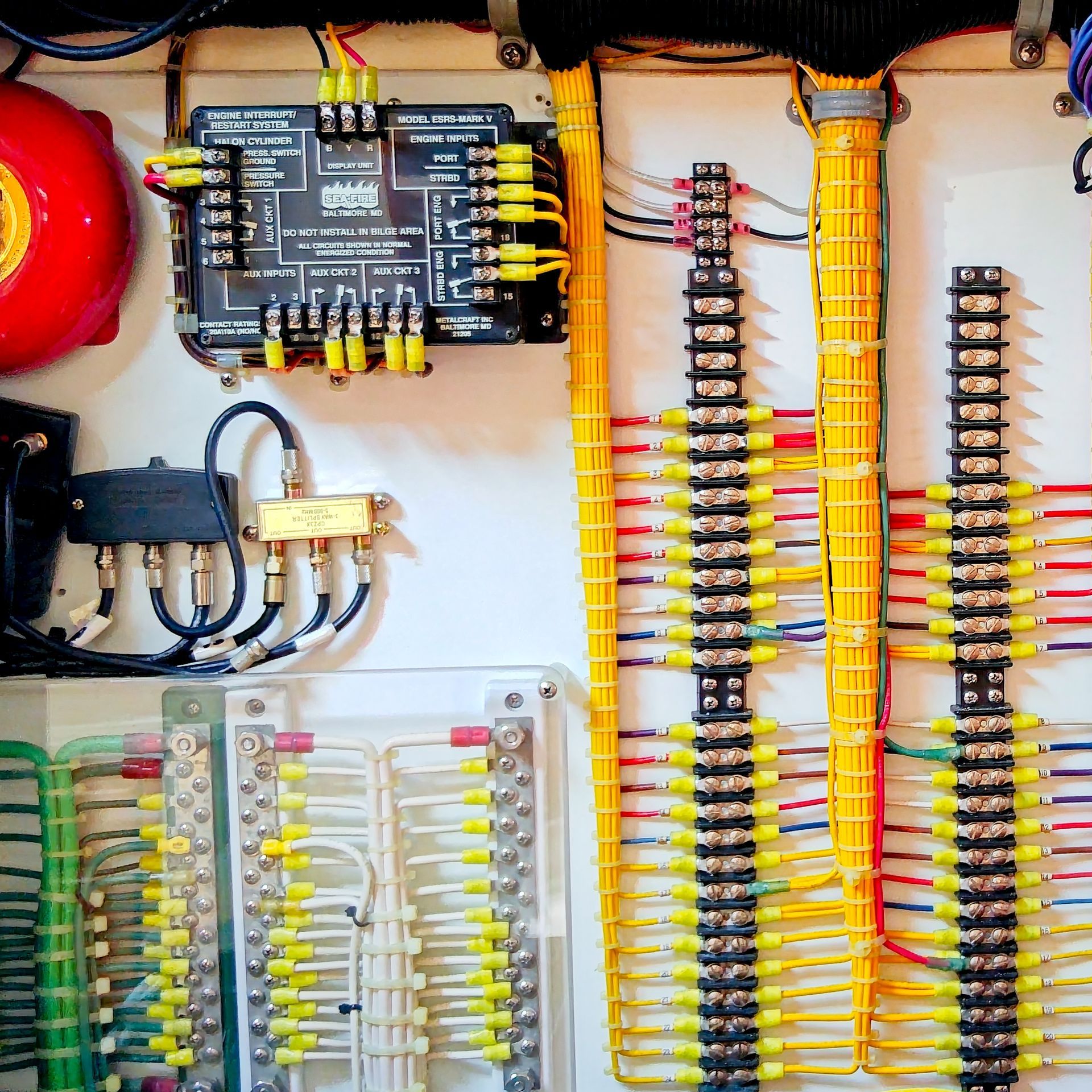
Good marine wiring isn’t complicated — but it is specific.
Key principles include:
- 📏 Correct wire gauge based on load and distance
- 🔌 Tinned marine-grade copper wire
- 🛠️ Proper crimping tools and techniques
- 🔒 Adhesive-lined heat shrink
- ⚡ Dedicated circuits for sensitive electronics
- 🧯 Correct fusing or breakers close to the power source
- 📎 Secure support every few inches
- 🔁 Service loops and strain relief
✅ When these basics are followed, most electrical problems don’t occur.
🔋 5. Battery & Charging Considerations
Even perfect wiring can’t compensate for poor battery or charging systems.
Common issues include:
- 🪫 Aging or mismatched batteries
- 🔋 Insufficient battery capacity
- 🔄 Improper battery isolation
- ⚡ Weak charging output
- 📉 Voltage sag under load
Modern boats place heavy demands on electrical systems.
Without adequate battery support, electronics are forced to operate
at the edge of their limits.
That’s when failures start.
💧 6. Corrosion & Water Intrusion
🚫 Water always finds a way.
Corrosion typically starts where:
- ✂️ Insulation is nicked
- ❌ Heat shrink wasn’t sealed
- 🔌 Connectors weren’t marine-rated
- 🧭 Wiring enters consoles or compartments
- 🌊 Cables rest in standing water
Once corrosion begins:
- 📈 Resistance increases
- 📉 Voltage drops
- 🔥 Heat builds
- ❓ Behavior becomes unpredictable
⚠️ By the time corrosion is visible, performance has already been compromised.
📊 7. Voltage Drop Testing Explained (In Plain Terms)
Voltage drop testing is one of the most important diagnostics in marine electrical work — and one of the most misunderstood.
What matters:
- ❌ Not battery voltage at rest
- ✅ Voltage at the device under load
Proper testing includes:
- 🔋 Measuring voltage at the battery
- 📟 Measuring voltage at the device
- ⚙️ Testing while systems are operating
- 🔑 Testing during engine start
- 📐 Comparing values to acceptable limits
🎯 Even small drops can cause reboots, freezing, or malfunctions — especially in modern digital systems.
🔁 8. How Clean Wiring Extends Electronics Life
Electronics don’t fail just because they’re old — they fail because they’re stressed.
Poor wiring causes:
- 🔥 Heat buildup
- 🔄 Repeated low-voltage events
- 🧠 Internal component stress
- 💾 Data corruption
- ❌ Premature failure
Clean, properly designed wiring:
- ⚡ Stabilizes voltage
- 🌡️ Reduces heat
- 📈 Improves performance
- 🕒 Extends equipment life
- 🔁 Prevents repeat failures
In many cases, correcting wiring restores reliability without replacing a single device.
🧠 Final Thought
Marine wiring is invisible — until it isn’t.
Most system failures aren’t mysterious, random, or unavoidable.
They’re the result of wiring and power systems that were
never designed to support modern marine electronics.
Before replacing expensive equipment, ask yourself:
❓ Is the system being powered and wired correctly?
Because when wiring is right — everything else works better ⚡.